
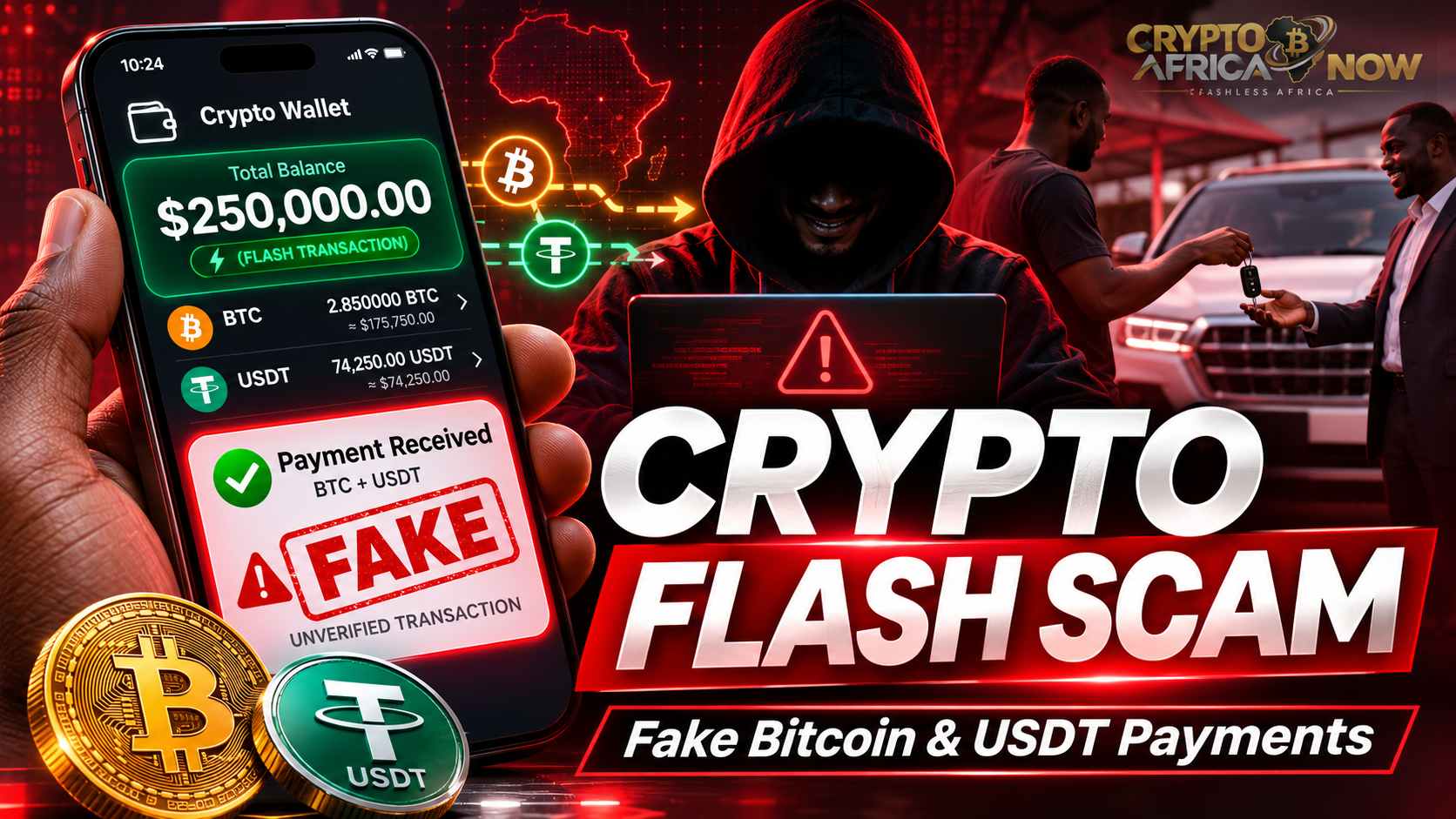
Imagine selling your car for $30,000 in cryptocurrency, only to discover that the payment you received was fake. This is the danger of Crypto Flash, a fraudulent practice in which scammers use fake Bitcoin or USDT transactions to deceive unsuspecting victims.
On October 17, 2026, reports emerged from Lagos, Nigeria, alleging that two suspects tried to acquire a Mercedes-Benz worth over ₦45 million using a fake Bitcoin payment notification. The alleged scheme was discovered before the vehicle was handed over.

How Does Crypto Flash Work?
Fraudsters use fake wallet balances, counterfeit cryptocurrency tokens or manipulated transaction notifications to make victims believe they have received genuine payments.
For example, a seller may see what appears to be $10,000 in USDT, even though no genuine, spendable cryptocurrency has been received.
Scammers rely on this deception to obtain cars, goods or services before victims discover the fraud.
How Can You Protect Yourself?
Before accepting cryptocurrency, verify the transaction on a trusted blockchain explorer such as Etherscan, Tronscan or BscScan. Confirm the receiving address, transaction status and official token contract.
Never release goods based only on screenshots or payment notifications.
Remember: A cryptocurrency balance displayed on a screen is not proof that real money has been received.
As cryptocurrency adoption grows across Africa, understanding these scams is becoming essential for businesses and individuals.
Crypto Africa Now | Cashless Africa

Ndasi Tata is a Bitcoin entrepreneur from Cameroon, who holds an M.Sc in Blockchain and Digital Currency from the University of Nicosia. He is an advocate of Bitcoin in Africa and uses various social media platforms to promote his ideas and ventures. Tata has a background in state journalism and has established himself as a significant figure in the Bitcoin community.





