
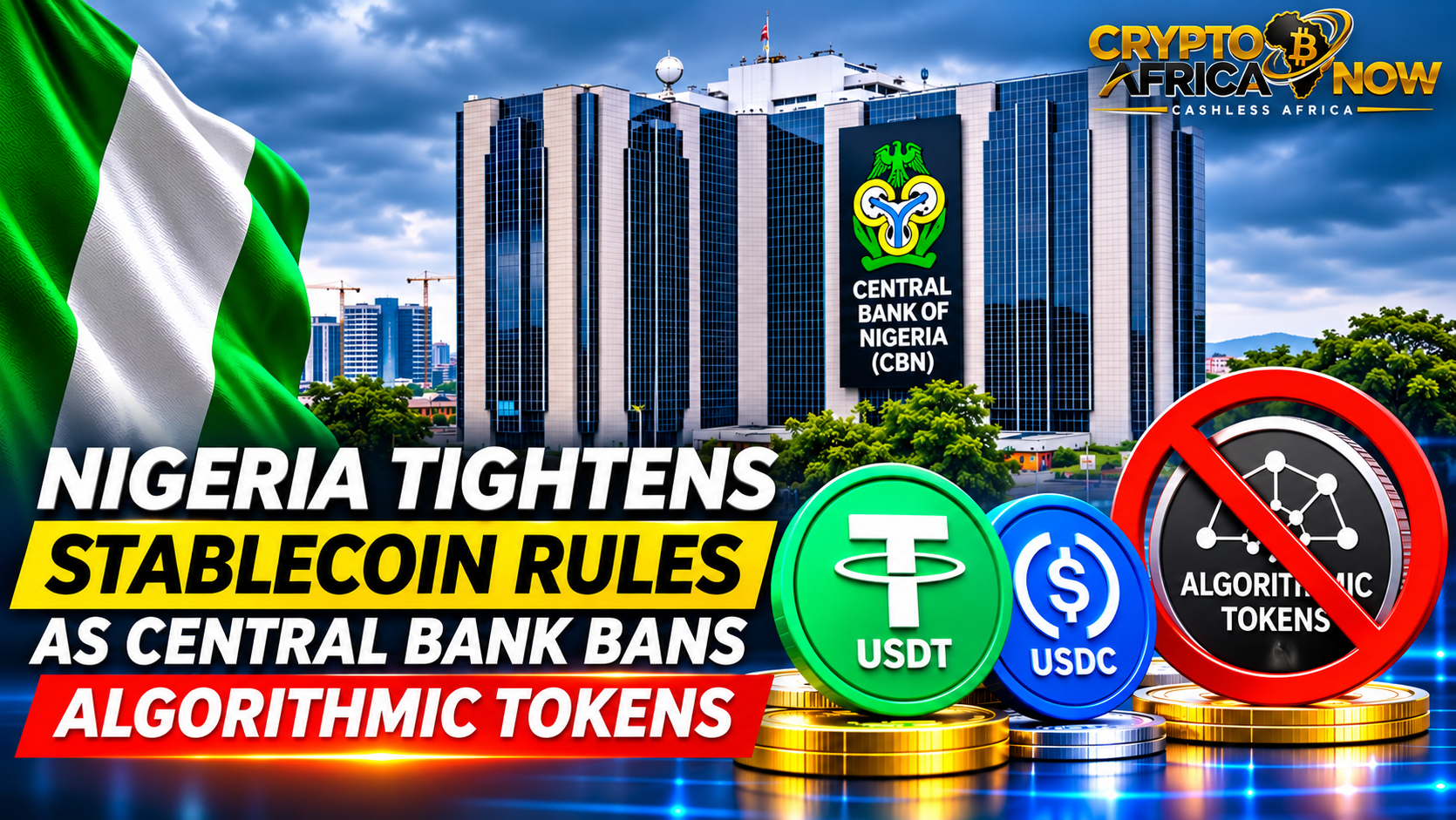
Nigeria’s Central Bank has introduced new regulations governing stablecoins and cryptocurrency payment services, banning algorithmic stablecoins while imposing stricter licensing requirements on digital asset companies operating in the country.
The new framework, which took effect on November 5, 2026, aims to strengthen financial security, protect consumers and bring greater transparency to Nigeria’s growing cryptocurrency industry.
The regulations cover stablecoin issuers, crypto-payment providers, digital asset custodians and businesses offering cryptocurrency-based money transfers and settlement services.
Why Nigeria Is Banning Algorithmic Stablecoins
Under the new rules, the Central Bank of Nigeria (CBN) has prohibited algorithmic stablecoins that depend mainly on automated systems rather than eligible financial reserves to maintain their value.
Unlike conventional reserve-backed stablecoins, algorithmic tokens attempt to maintain a fixed price by automatically adjusting supply or using market incentives.
Such systems can become unstable during financial market disruptions, exposing investors and users to significant losses.
The CBN has also prohibited certain cryptocurrency-backed stablecoins and tokens that do not provide holders with enforceable redemption rights.
New Licensing Requirements for Crypto Companies
The regulations introduce separate licensing categories for stablecoin issuers operating in Nigeria.
Companies issuing naira-backed stablecoins will fall under Class 1, while those issuing foreign-currency-backed stablecoins will require Class 2 licences.
According to the regulatory framework, Class 1 issuers must maintain minimum paid-up capital of ₦10 billion, while Class 2 issuers must meet a ₦15 billion requirement.
Stablecoin issuers must also obtain approval for individual tokens before making them available to the Nigerian market.
The rules apply to both Nigerian companies and foreign businesses providing regulated digital asset services to Nigerian customers.
Crypto Companies Given 180 Days to Comply
Existing cryptocurrency payment operators have been given 180 days from November 5, 2026, to apply for the appropriate licences or authorisations.
However, they must register with the CBN within 30 days and begin regulatory reporting within 60 days, while complying with applicable anti-money-laundering requirements.
The framework also requires businesses to strengthen customer identification, transaction monitoring, cybersecurity and measures against financial crime.
Companies failing to meet the requirements could face regulatory penalties or restrictions on their operations.
What This Means for Nigerian Crypto Users
For cryptocurrency users, the new regulations could introduce greater transparency and accountability among digital asset service providers.
Businesses offering stablecoin payments, remittances and merchant services will face closer supervision as authorities seek to prevent financial fraud and protect consumers.
However, regulatory approval does not guarantee that a stablecoin is risk-free, while existing cryptocurrency trading permissions do not automatically authorise payment services.
Consumers are encouraged to verify the regulatory status of payment platforms before depositing funds or conducting transactions.
Nigeria’s Digital Payment Industry Enters a New Era
Nigeria remains one of Africa’s major cryptocurrency markets, with digital assets increasingly used for international transfers, business payments and online financial services.
The new regulations could encourage greater institutional participation in stablecoin payments while creating additional compliance costs for smaller fintech companies.
The Central Bank will oversee non-security digital assets used for payments and settlement, while the Securities and Exchange Commission will retain responsibility for securities-related digital assets.
The long-term impact will depend on how effectively the regulations are implemented and whether licensed companies can provide affordable and secure payment services.
Have Your Say
Will Nigeria’s tougher stablecoin regulations protect cryptocurrency users and strengthen trust, or could the new licensing requirements discourage smaller fintech startups from entering the market?
Share your opinions and questions in the comments as we continue exploring Africa’s cryptocurrency and digital financial future.
For cryptocurrency, Web3, blockchain and fintech events, media coverage, partnerships and enquiries, contact: sales@cryptoafricanow.com
Crypto Africa Now | Cashless Africa
Sources: Central Bank of Nigeria, Regulations for the Operations of Non-Security Virtual Assets in Nigeria, November 5, 2026; The Block, November 6, 2026.

Francis Chinedu is a Nigerian-born digital marketing specialist, a bitcoin and blockchain enthusiast, and a YouTuber who enjoys covering events that empower young Africans, especially in technology.