
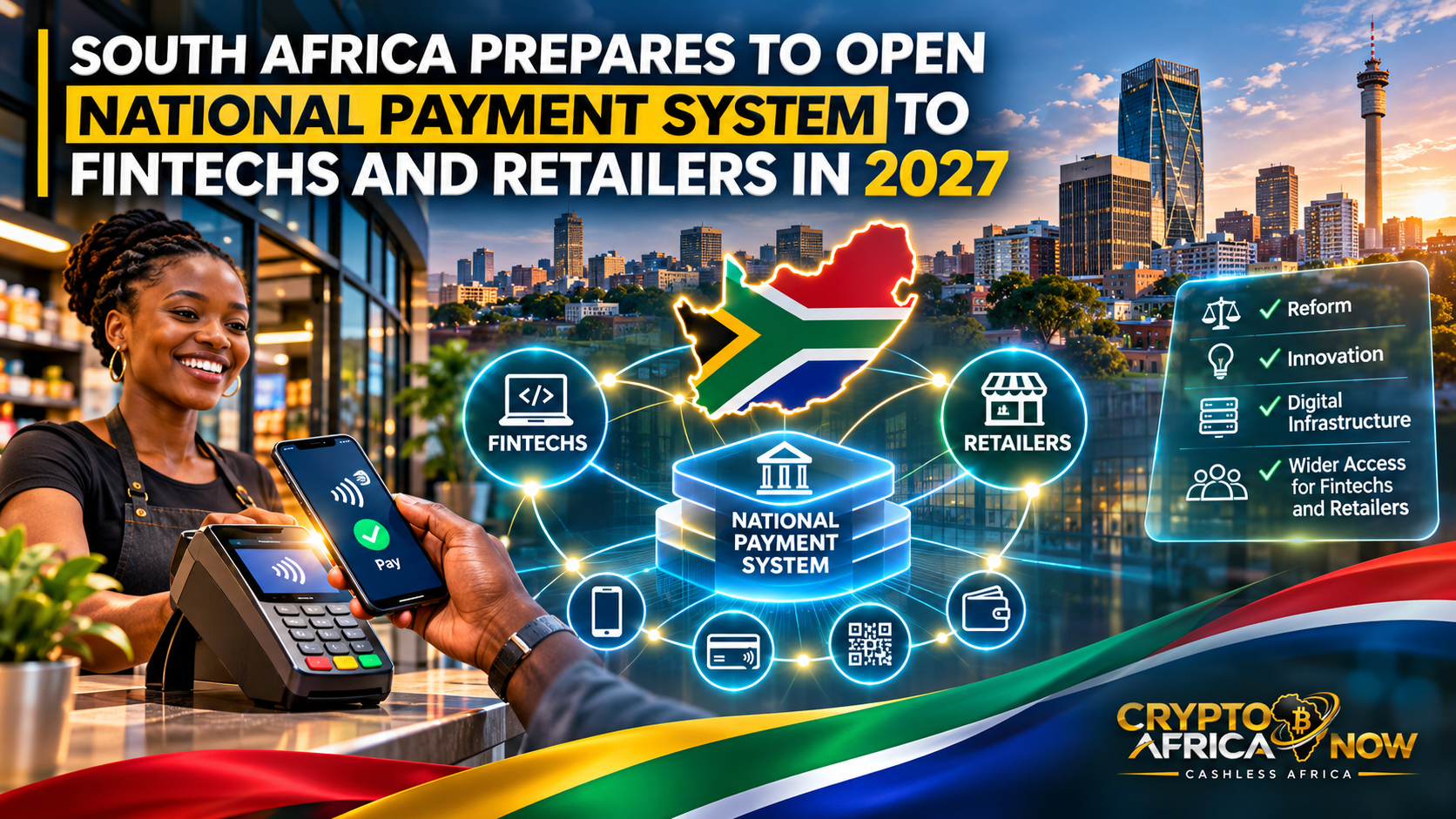
JOHANNESBURG, SOUTH AFRICA — South Africa is preparing to open its national payment system to financial technology companies, retailers and telecommunications operators from 2027, in a major reform aimed at improving competition and making digital payments more accessible.
The initiative, led by the South African Reserve Bank (SARB), could allow eligible non-bank businesses to participate more directly in the country’s payment infrastructure without relying entirely on traditional banking institutions.
According to Reuters, the central bank expects the first non-bank participants to begin operating under the new arrangements during 2027, with wider access targeted for the middle of the year.
Central Bank Plans New Payment Regulations
The reforms form part of the Reserve Bank’s Payments Ecosystem Modernisation Programme, designed to improve payment efficiency, strengthen financial security and reduce transaction costs.
The central bank plans to publish a new authorisation framework by the end of November 2026, outlining the requirements for non-bank financial service providers.
Pradeep Maharaj, Executive Director of the programme, said the changes would create opportunities for fintech companies, retailers and telecommunications operators to participate in payment services under regulatory supervision.
The timetable remains subject to licensing, technical integration and regulatory readiness.
New Opportunities for Fintech Companies
For years, traditional banks have played a central role in South Africa’s national payment infrastructure.
Although fintech businesses already provide digital financial services, many depend on banking partnerships to access underlying payment networks.
The proposed changes could allow qualifying companies to develop payment solutions with fewer intermediaries.
The reforms could also support the expansion of PayShap, South Africa’s real-time payment service, which enables customers to transfer money quickly between participating financial institutions.
Greater participation could encourage innovation in mobile payments, merchant transactions and other digital financial services.
South Africa Targets Affordable Digital Payments
The Reserve Bank hopes the reforms will encourage competition, reduce payment costs and improve access to financial services.
Small businesses and consumers could benefit from a wider choice of payment providers and more convenient transaction options.
However, participating companies will still need to meet requirements covering cybersecurity, fraud prevention, consumer protection and operational reliability.
The central bank is also considering a national cash utility and shared ATM infrastructure to make physical cash services more affordable and accessible.
Africa’s Digital Payment Industry Continues to Expand
South Africa’s planned reforms come as African countries increasingly invest in modern financial infrastructure to support cashless transactions and economic growth.
The changes could encourage regional fintech companies to explore new partnerships and expand their digital payment operations.
However, access to South Africa’s payment system would not automatically authorise companies to provide financial services in other African countries.
The success of the reforms will depend on effective regulation, secure infrastructure and whether consumers experience lower fees and more reliable payment services.
Have Your Say
Will allowing fintech companies and retailers to access South Africa’s national payment system make digital transactions cheaper and easier, or will regulatory costs remain a challenge for smaller businesses?
Share your opinions and questions in the comments.
For cryptocurrency, Web3, blockchain, AI and fintech events, media coverage, partnerships and enquiries, contact: sales@cryptoafricanow.com
Crypto Africa Now | Cashless Africa

Francis Chinedu is a Nigerian-born digital marketing specialist, a bitcoin and blockchain enthusiast, and a YouTuber who enjoys covering events that empower young Africans, especially in technology.